Showing posts with label research. Show all posts

Friday, March 31, 2017

Badger caches cow...


Wait! ... What?!?

Yep... scientists researching the ecology of scavengers (in other words> studying how animals that feed on dead animal or plant matter interact with each other and their environments) during winter in the Great Basin Desert, Utah, staked out 7 calf carcasses (each with an associated trap camera) and got an unexpected result...
Badgers!
Scientific researchers in Great Basin Desert, Utah, caught American badgers (on trap cameras) caching cows.
While badgers are known scavengers, the researchers hadn't planned on studying any mustelids, including badgers.


Badgers are hard to study since they are generally active underground or are nocturnal (out and about at night), so their behaviors aren't well-known. Last winter (January, 2016) the researchers caught two badgers (images, not the badgers themselves! ; ) caching two of the staked out carcasses. This is the first evidence of a badger caching / burying an animal larger than itself.

Here is a video (from a trap camera) of one of those badgers caching /burying it's find for later:


updating soon...


The original video is on YouTube!

For the research article:
.
 Subterranean caching of domestic cow (Bos taurus) carcasses by American badgers (Taxidea taxus) in the Great Basin Desert, Utah


Friday, January 27, 2017

North American River Otter - The BASICS!

North American River Otter
(Lontra canadensis)


The posts this week are brief overviews of EACH of the otter species, focusing on recent information about each species and a vid or 2... 
 
This is the ONLY freshwater otter in ALL of North America, 
and, as long as it can access fresh water for cleaning up,
it is adapted to use brackish and marine habitats to!!!


North American River Otters are highly adaptable to different types of habitats, but they are very sensitive to pollution and changes in water quality. They are extremely playful, and turn almost all regular activities into a game. They do not tend to pair-bond (though sometimes they do), but males will help to raise the pups if given the opportunity. Males tend to be more solitary than females, but they don't do well alone for long periods of time and will seek out the company of other otters.


This is the ONLY otter species in the world with a population status of "Stable".


Status: Least Concern and Stable


The North American River Otter has a very large range and can be found throughout most of the US (the map below isn't quite accurate, we'll be creating a more accurate map, it is not found in very arid regions). It's habitat overlaps with the sea otter along the west coast of the US.


There are TONS (if you could weigh content on the internet ;) ) of videos "out there" of North American River Otters! GO! ENJOY!!! (but in the mean time, here are a few from us!)

Let's just start with this...


If you want more in-depth reading a few research articles you could explore on these otters includes:

>   Genetic variation among populations of river otters in North America: considerations for reintroduction projects, TL Serfass, RP Brooks, JM Novak. Journal of Mamm., 1998 
>   Deciphering ecological barriers to North American river otter (Lontra canadensis) gene flow in the Louisiana landscape, EK Latch, DG Scognamillo, JA Fike. Journal of Am Gen, 2008 
Ten new polymorphic microsatellite loci for North American river otters (Lontra canadensis) and their utility in related mustelids, AS Beheler, JA Fike, G Dharmarajan. Molecular Ecology, 2005 
Characterization of basal seminal traits and reproductive endocrine profiles in North American river otters and Asian small‐clawed otters, HL Bateman, JB Bond, M Campbell, M Barrie. Zoo …, 2009
Perfluorooctanesulfonate and related fluorinated hydrocarbons in mink and river otters from the United States, K Kannan, J Newsted, RS Halbrook. Environmental science & ACS Publ, 2002 
Prey selection by marine-coastal river otters (Lontra canadensis) in Newfoundland, Canada, D Cote, HMJ Stewart, RS Gregory. Journal of Mamm, 2008

Thursday, January 26, 2017

Neotropical Otter - Basics

Neotropical Otter
(Lontra longicaudis)


As promised, the posts this week are brief overviews of EACH of the otter species, focusing on recent information about each species and a vid or 2...
Neotropical Otters latin name (Lontra longicaudis) means Otter with looong tail! 
I hope that you enjoy exploring them!


Unlike most otter species, Neotropical Otters are relatively solitary and are very elusive even in pristine habitats. Male and female Neotropical Otters meet one day a year for breeding, and then go their separate ways. Neotropical Otters prefer clear, fast-flowing water. Habitat destruction and water pollution are major threats to this species.


Status: Near Threatened and Decreasing


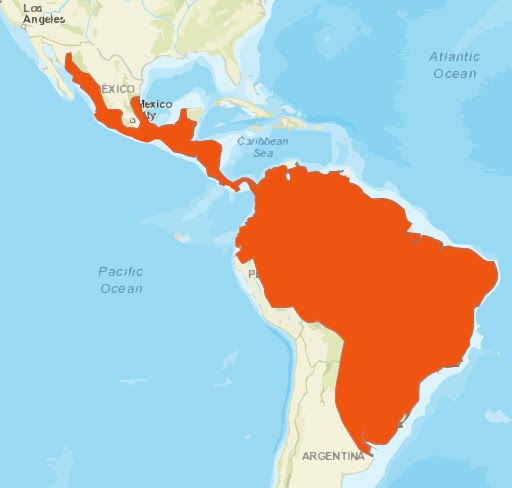
Neotropical Otters are found through most of Mexico all the way south to Argentina (except in arid regions). It's habitat range approaches the North American River Otter to the north and the South American River Otter to the south.


This species occurs in it's range from sea level to 4,000 meters (over 13,000 feet altitude).


This species is very shy and elusive,s o getting good videos isn't easy!

A couple of Neotropical Otters together (wild)


Neotropical Otter videos, swimming and grooming (in captivity)


If you want more in-depth reading a few research articles you could explore on these otters includes:

>   Trophic ecology and the use of shelters and latrines by the Neotropical otter (Lontra longicaudis) in the Taquari Valley, Southern Brazil, CB Kasper, VAG Bastazini, J Salvi. Iheringia. Série, 2008
O Carvalho-Junior, AB Birolo. IUCN Otter Spec., 2010
>   Seasonal and spatial differences in feeding habits of the Neotropical otter Lontra longicaudis (Carnivora: Mustelidae) in a coastal catchment of southeastern. ML Rheingantz, HF Waldemarin, L Rodrigues.  Zoologia , 2011
>   Defining Neotropical otter Lontra longicaudis distribution, conservation priorities and ecological frontiers, ML Rheingantz, JFS de Menezes. Tropical Conservation, 2014

Sea Otter - The Basics

Sea Otter
(Enhydra lutris)


As promised, the posts this week are brief overviews of EACH of the otter species, focusing on recent information about each species and a vid or 2...
This species lives in the ocean, along the coast of the North pacific, enjoy! :)


Sea Otters spend their entire lives in the ocean, only leaving the water in the case of extremely bad storms. They are also one of the known tool-using mammals, using rocks to break shells open so they can consume the shellfish inside. It is important that they are able to do this well because they have to eat about 30% of their body weight every day!


Status: Endangered and Decreasing


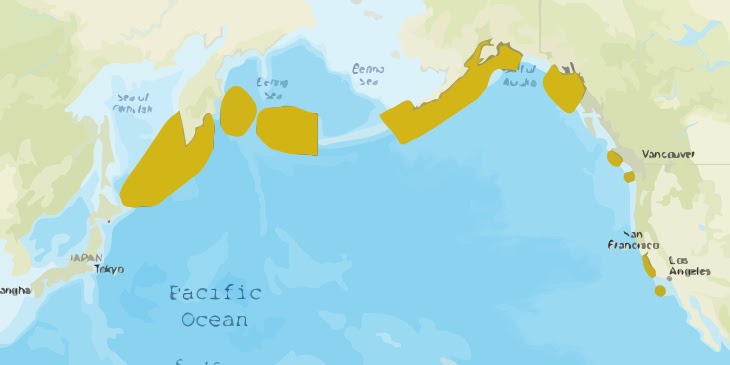
The Sea Otter range traditionally rimmed the outlying land/islands of the northern Pacific Ocean from Baja Mexico around Japan; currently they are restricted to the sporadic range shown in tan below.


Sea Otters at Seattle Aquarium, eating, playing, cleaning, and watching the tourists!


Live WILD Sea Otter mom giving birth near Monterey Bay Aquarium


PBS's NATURE on Sea Otters

Another PBS documentary, thsi time from Jean-Michel Cousteau!


If you want more in-depth reading a few research articles you could explore on these otters includes:

CK Johnson, MT Tinker, JA Estes… - Proceedings of the …, 2009 - National Acad Sciences
>   Southern sea otter as a sentinel of marine ecosystem health,DA Jessup, M Miller, J Ames, M Harris, C Kreuder… - EcoHealth, 2004 - Springer
>   Foraging patterns and prey selection in an increasing and expanding sea otter population,KL Laidre, RJ Jameson - Journal of Mammalogy, 2006 - BioOne
> Gene transcription in sea otters (Enhydra lutris); development of a diagnostic tool for sea otter and ecosystem health, L Bowen, AK Miles, M Murray… - Molecular ecology …, 2012

Wednesday, January 25, 2017

Eurasian Otter - The Basics!

Eurasian Otter
(Lutra lutra)

As promised, the posts this week are brief overviews of EACH of the otter species, focusing on recent information about each species and a vid or 2...
There is a LOT of information "out there" about the Eurasian Otter,
they are the considered the "typical" otter
(just take a look at that genus and species name! ; ) ;
consider this just a brief intro, a sneak peek, at the only otter species 
that can be found on THREE continents!


Eurasian Otters are found across most of Europe and Asia AND in parts of northern Africa. They are always found near water, fresh or salt, as long as there are freshwater pools nearby for drinking and bathing. They tend to live alone except when mating, when the male and female may stay close together for ~ a week, or for females when raising a litter. Though they are excellent swimmers, Eurasian Otters can only hold their breath for about 30 seconds!


Status: Near Threatened and Decreasing


The teal area in the map below shows where the Eurasian Otter is known to exist; it may be found in other small sub-populations not shown.


For our Eurasian Otter videos, we have a treat, one of Questˣ's friends, Andy Coventry, takes some of the most wonderful videos (and photos) of Eurasian otters! 

Here is a link to a video he shared with us recently of 2 Eurasian otters swimming in the River Don, Scotland.

Video about the Eurasian Otter Conservation Program, on otter conservation in Israel


 ...and here's some video from Pembrokeshire,Wales, taken by Dawn and Jim...


...and a white-tailed eagle after an otter's meal off the Island of Mull, watch closely!


If you want more in-depth reading a few research articles you could explore on these otters includes:

>   An evaluation of field and noninvasive genetic methods for estimating Eurasian otter population size, P Hájková, B Zemanová, K Roche, B Hájek - Conservation Genetics, 2009
>   Competition between Eurasian otter Lutra lutra and American mink Mustela vison probed by niche shift., L Bonesi, P Chanin, DW Macdonald - Oikos, 2004

>   Chemical contaminants in fish species from rivers in the North of Luxembourg: Potential impact on the Eurasian otter (Lutra lutra), A Boscher, S Gobert, C Guignard, J Ziebel, L L'Hoste… - Chemosphere, 2010
>   The reintroduction of the Eurasian otter (Lutra lutra) into the Netherlands: hidden life revealed by noninvasive genetic monitoring,HP Koelewijn, M Pérez-Haro, HAH Jansman… - Conservation …, 2010
L Remonti, A Balestrieri… - Canadian Journal of …, 2009


Asian Small-Clawed Otter - The Basics!

Asian Small-Clawed Otter
(Aonyx cinereus)


As promised, the posts this week are brief overviews of EACH of the otter species, focusing on recent information about each species and a vid or 2...
This is the 3rd of the 3 otter species that are found *only* in Asia, !


The Asian Small-Clawed Otter is the smallest of all otter species, and also, arguably, the most social. They mate for life, and live in family groups of between four and twelve, and sometimes up to twenty, otters. The group hunts, plays, and sleeps together. These otters will travel a long distance out of water in search of new habitats. They don't generally dive deeper than their body length in search of food, and spend more time out of the water than most otter species.

(Was also known as Oriental Small-Clawed Otter).

Status: Vulnerable and Decreasing 


The areas in yellow on the map below show where the Asian Small-Clawed Otter lives in southeast Asia. Despite how adaptable they are, they have become extinct in large parts of their original range.


Asian Small-Clawed Otters are very social and gregarious, watch and see for yourself!

 Asian Small-Clawed Otters (India) caught on camera by Wild Otters...


Here are a few clips of a family group kept at woodland Park Zoo (who participates in the Species Survival Plan):

...a group of otters is, appropriately, called a romp... 


...otters interacting with a crow (starts @ 3.20)... 


...nap time at Woodland Park Zoo 


If you want more in-depth reading a few research articles you could explore on these otters includes:

>   Conservation of the Asian small-clawed otter (Aonyx cinereus) in human-modified landscapes, Western Ghats, India, N Prakash, D Mudappa, TRS Raman… - Tropical Conservation …, 2012
>   Science-driven management of protected areas: a Philippine case study, NAD Mallari, NJ Collar, PJK McGowan… - Environmental …, 2013


.

Smooth Coated Otter - The Basics!


Smooth Coated Otter 
(Lutrogale perspicillata)


As promised, the posts this week are brief overviews of EACH of the otter species, focusing on recent information about each species and a vid or 2...
 
This is one of the 3 otter species that are found *only* in Asia, !


The Smooth Coated Otter prefers to live in undisturbed areas. They tend to be nocturnal, sometimes hunting alone and sometimes in large groups. Smooth Coated Otters mate for life, and live in family groups consisting of the mated pair and their pups (often including full-grown pups). Research demonstrates that the alpha female is dominant and determines hierarchy within the group, while the alpha male moves the group through their territory. Smooth Coated Otters are proficient both on land and in water. They are powerful swimmers, and on land they climb and jump quite well.

Status: Vulnerable and Decreasing


The Smooth-Coated Otter (in rust on the map below) is found through southern and southeastern Asia, with an apparently isolated population southern Iraq (it's current status throughout the rest of the Middle East is currently unknown).


Even though they tend to be nocturnal, there are some really good videos of smooth-coated otters:

A smooth-Coated Otter in the wild in India...


A family of smooth-coated otters outside of their den (thank you "Wild Otters")


...and night shots from "Wild Otters"


If you want more in-depth reading a few research articles you could explore on these otters includes:

D Joshi, AR Bhandari 2016
>   Conservation importance of Nakai-Nam Theun National Protected Area, Laos, for small carnivores based on camera trap data. CNZ Coudrat, C Nanthavong… - Raffles Bulletin of …, 2014
>   Al-Sheikhly, O.F. and Nader, I.A.. The Status of Iraq Smooth-Coated Otter Lutrogale perspicillata maxwelli Hayman 1956 and Eurasian Otter Lutra lutra Linnaeus 1758 in Iraq IUCN Otter Spec. Group Bull. 30 (1): 18 - 30. 2013

Hairy Nosed Otters - The Basics

Hairy-Nosed Otter
(Lutra sumatrana)

As promised, the posts this week are brief overviews of EACH of the otter species, focusing on recent information about each species and a vid or 2...
This is the first of the 3 otter species that are found *only* in Asia, enjoy exploring them!


Very little is known about the Hairy-Nosed Otter. It is endangered and rare. The nose is completely covered in hair, and the feet are webbed, with strong claws.The major threat to Hairy-nosed Otters is from humans: hunting, habitat competition, destruction, and pollution. Despite efforts to establish a captive breeding program, there have only been three of these otters held in captivity (all male).


Status: Endangered and Decreasing


 The Hairy-nosed otter is found in small areas scattered across the area shown in purple in the map to the left.


This otter is extremely reclusive and rare, so are the videos:

Link to Hairy-nosed otter video and conservation in Cambodia.

Brief vid of a young hairy-nosed otter entering the water!


If you want more in-depth reading a few research articles you could explore on these otters includes:


>   Food Habitats of the Hairy-nosed otter (Lutra sumatrana) and the Small clawed otter (Amblonyx cinerea) in Pru Toa Daeng Peat Swamp Rorest, Southern Thailand. Kanchanasakha, B.K. 2007. 

>   Keep wetlands wet: the myth of sustainable development of tropical peatlands–implications for policies and management ,S Evers, CM Yule, R Padfield, P O'reilly… - Global change …, 2016
>   Camera trapping for the study and conservation of tropical carnivores.R Sollmann, A Mohamed, MJ Kelly - The Raffles Bulletin of Zoology, 2013 -

Tuesday, January 24, 2017

Spotted-Necked Otters - The Basics

  Spotted-Necked Otter 
(Hydrictis maculicollis)

As promised, the posts this week are brief overviews of EACH of the otter species, focusing on recent information about each species and a vid or 2...
This is the last of the 3 species of fully African otters, enjoy! :)  


Due to genetics work done on otters, this otter has been put in to a new genus, Hydrictis! (more about that in another post!)
Spotted-necked Otters are fairly small, weighing 10 to 20 lbs.They live alone or in small family groups, but often form social and hunting groups of five to twenty members. They spend more time in the water than other freshwater species, almost never leaving the water or water's edge. Resting sites, holts, latrines, and breeding areas are all right next to the water; they're not very agile on land, but, like other otters, the Spotted-necked Otter tends to turn everything it does into a game!

Status: Near Threatened and Decreasing


 The Spotted-Necked Otter is native to large parts of southern Africa, as shown in green in the map to the left.


The Spotted-Necked Otter's habitat in places overlaps the habitat of the Cape (african) Clawless Otter and the Congo Clawless Otter (shown in the 2 previous blogs!).


 Videos of Spotted-necked otters in the wild are few and far between, so... until I can track some good ones down here is video from the San Diego Zoo!


If you want more in-depth reading a few research articles you could explore on these otters includes:


>   Differentiation of two South African otter species (Aonyx capensis and Lutra maculicollis) from spraint based on partial CytB primer sets,MT Madisha, et al, 2015
Conflict between spotted-necked otters and fishermen in Hlan River, Benin,AH Akpona et al, 2015
Capacity building to conserve African otters,H Akpona et al, 2016


Congo Clawless Otter - The Basics

Congo Clawless Otter 
(Aonyx congicus)

As promised, the posts this week are brief overviews of EACH of the otter species, focusing on recent information about each species and a vid or 2...
We hope you enjoy! :)  


The Congo Clawless Otters' back feet have small claws on the three middle toes, and very little webbing. The front feet have very small claws and no webbing. The front paws are very sensitive, like those of its close relative the Cape Clawless Otter, to increase it's success in finding food under rocks and in the mud.  Their short fur (providing less insulation) and the abbreviated webbing of its feet make the Congo Clawless Otter the otter least adapted for life in the water. Congo Clawless Otters are mostly solitary, only interacting with other otters when monogamous pairs come together to mate.


Status: Near Threatened and Decreasing.


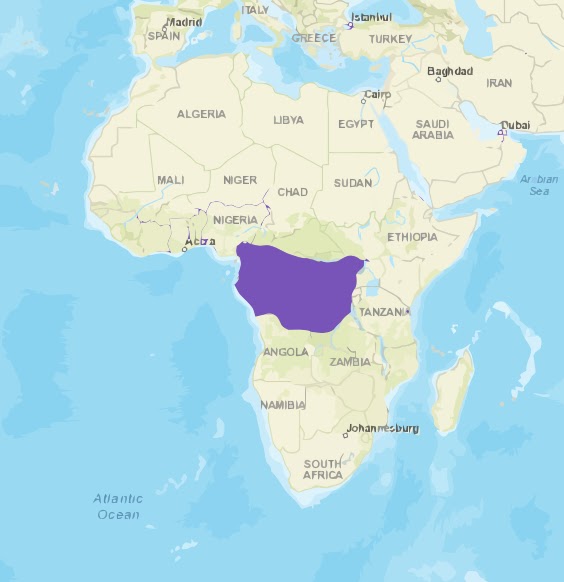
The Congo Clawless Otter is native to the Congo Region of southern Africa, as shown in purple on  the map to the left.


The Congo Clawless Otter's habitat is mostly surrounded by the habitat of Cape (african) Clawless Otter and overlaps with parts of the Spotted-necked Otter's habitat..


Video from research done on the Congo Clawless Otter (Davenport, et al... 2011)


Naia, an orphaned and partially paralyzed Congo Clawless Otter, rehabbing during her first BIG SWIM, 2013!


If you want more in-depth reading a few research articles you could explore on these otters includes:


>   Local hunting of carnivores in forested Africa: a meta-analysis, 2014

>   Divergent Skull Morphology Supports Two Trophic Specializations in Otters (Lutrinae)

Diet, foraging behaviour and coexistence of African otters and the water mongoose, DT Rowe-Rowe, MJ Somers, 1998

Cape/ African Clawless Otter - The Basics

 Cape / African Clawless Otter
(Aonyx capensis)

As promised, the posts this week are brief overviews of EACH of the otter species, focusing on recent information about each species and a vid or 2...

We hope you enjoy! :)  


The Cape Clawless Otter's feet have almost no webbing, and claws only on the three middle toes of the hind feet. The front feet are very sensitive and hand-like; they are so dexterous with their front paws that they are left- or right-handed, just like people are. They use their hands to dig for prey in the mud or under rocks. They tend to form loose social and foraging groups with other otters.  Like other otters, they are incredibly playful and are excellent swimmers.


Status: Near Threatened and Decreasing.


The Cape (or African) Clawless Otter is native to large parts of southern Africa, as shown in red on  the map to the left.


Where the Cape (African) Clawless are absent in the Congo region, they are replaced in that habitat by the Congo Clawless Otter.


In this video, Ottie , an African Clawless otter rehabbing at the Back to the Wild Program, chases a butterfly in his free time! (thank you Audrey Delsink)


...and here is a group together near Table Mountain National Park, South Africa. (thank you TMNP!)


If you want more in-depth reading a few research articles you could explore on these otters includes:

>  Angelici, F.M., Politano, E., Bogudue, A.J. and Luiselli, L. 2005. Distribution and habitat of otters (Aonyx capensis and Lutra maculicollis) in southern Nigeria. Italian Journal of Zoology 72(3): 223-227.
>  Dixon, R.K., Smith, J. and Guill, S. 2003. Life on the Edge: Vulnerability and Adaptation of African Ecosystems to Global Climate Change. Mitigation and Adaptation Strategies for Global Change 8: 93-113.
>  Differentiation of two South African otter species from spraint based on partial CytB primer cells

Thursday, November 10, 2016

Jellyfish blooms, why?!? [science translated! specialized science *lingo* translated for a very wide audience]

[Sometimes specialized science language can get sooo specialized and/or change so rapidly that even scientists in similar fields can find it a challenge to be sure what is meant, or an interested amateur can end up feeling lost and "out"; the language used isn't meant to exclude any reader, it is used so the *scientists* can communicate what they mean more clearly and (believe it or not ;)  ) more quickly! The best thing to do if you're ineterested is ferquently to copy the article and stick the definitions of the words you're not sure of right in to the text so you can become more familiar with the words *in context*. Definitions are given in (= definition)]

by S. Abboud


A bloom is a consequence (= result) of seasonal life cycles when there is localized increases in asexual reproduction and growth typical of all metagenic (= the reproduction cycle of organisms that alternate between a sexual generation and an asexual generation) organisms that result in normal or abnormal seasonal biomass (Figure 1: an alternate photo of a bloom has been inserted). Blooms can be influenced by localized anthropogenic (= human caused) effects attributed to oceanic sea surface temperature, nutrient inputs (Purcell et al. 2007, Brodeur et al. 2008), disturbances (Brodeur et al. 2002) including over-harvesting fisheries and translocations (Purcell 2005, Howarth et al. 2002). Apparent sudden jellyfish population increases (i.e. blooms, Figure 2) are possible due to increased recruitment (= increase in a natural population as offspring grow and new animals arrive) from local asexual reproduction (Madin & Deibel 1998), high fecundity (i.e. enhanced fertilization success), aggregation (= gathering) of mature medusae (Strathmann 1990, Purcell and Madin 1991, and Hamner et al. 1994), and previously mentioned ecophysiological (= adaptation of an organism's physiology/function to environmental conditions) and reproductive versatility (= adaptive reproductive strategies) (Hadfield & Strathmann 1996, Lucas 2001, Deibel & Lowen 2011).


Term
Description (Lucas & Dawson 2013)
bloom
A true bloom is a consequence of seasonal life cycles when there is localized increased asexual reproduction (= producing offspring without a sexual act) and growth typical of all metagenic organisms, resulting in normal or abnormal seasonal biomass. A true bloom is categorized as an endemic (= native / to a restricted area) bloom staying in the same location over time. Though apparent blooms are either transient blooms (blooms that move spatially over time) or an accumulation within enclosed habitats, not reflecting true blooms
accumulation
A long-term summation of fluctuations (= changes/ variability) in relative number compared on temporal (= time) and spatial (= space) scales without causation
mass occurrence
Similar to an accumulation but larger in magnitude (= number - like a baby elephant or adult elephant is one elephant) and/or biomass (= total amount of animal by total mass of animals present rather than by number - a baby elephant is much smaller than an adult, so even though it is also ONE elephant it has a much smaller individual biomass- a group of 12 baby elephants would have a smaller biomass than a group of 12 adult elephants)
aggregation
Accumulation of individuals likely emigrated (= left) from natural or apparent blooms due to passive drifting, active behavior, or a combination of the two
swarm
A very dense aggregation (= group) of individuals coming together primarily through individual motion than currents alone
outbreak
Extraordinary increases in biomass over a short time period within a reproductive season that is typically associated with anthropogenic (= human caused) ecosystem changes
 

            Due to the pelagic mobility of jellyfish, it is often difficult to properly describe a mass of jellyfish as a bloom or any of the other previously described related events. These events similar to jellyfish blooms differ by location of reproduction, mode of how they came together and other factors that influence jellyfish distributions (Mills 2001; Graham et al. 2001; Hamner & Dawson 2009; and Richardson et al. 2009; also see Lucas & Dawson submitted 2012). It is imperative to consistently use the following relative terms to facilitate interpretation of scientific literature and best present cause and consequences (translation of entire section = To make communication between those interested in this topic as clear as possible it is very important that everyone use the same terms, and with the same meaning!) (Lucas & Dawson 2013): bloom, accumulation, mass occurrence, aggregation, swarm, and outbreak (Table 1).Due to the pela et al. 2001; Hamner & Dawson 2009; and Richardson et al. 2009; also see Lucas & Dawson submitted 2012). It is imperative to consistently use the following relative terms to facilitate interpretation of scientific literature and best present cause and consequences  (Lucas & Dawson 2013): bloom, accumulation, mass occurrence, aggregation, swarm, and outbreak (Table 1).

            The key to understanding the distributions of jellyfishes is in identifying the original source of jellyfish blooms. Bloom biology focus is on the meditative medusae form, which, in large numbers, can have negative economic impacts on commercial fisheries from fish larvae consumption (Sandlifer et al. 1974), on aquaculture by destroying equipment and stock (Purcell et al. 1999; Delano 2006), and on power station operations by impairing equipment (as seen in Brodeur et al. 2008; Clark 2008).


            Due to the complexity of jellyfish life histories and the consequences of their blooms, Parsons (1993) and Mills (1995) implored jellyfish scientists to study the functional role of jellyfish in maintaining the ecology of the oceans. This call resulted in much of the current information that we know and highlighted what remains to be known about jellyfish blooms.
Phylogenetics (= development and differences within species or structure within species) and population genetics have proven to be useful for understanding jellyfish biology (Hamner & Dawson 2008; 2009), their geographic distribution (e.g., Dawson 2005), and genetic variation between populations. Jellyfish that aggregate, bloom, or swarm are clustered taxonomically and phylogenetically (translated section = Jellyfish that "live together" tend to be similar in development and in relatedness to each other), though taxa that bloom and swarm are typically more diverse than non-accumulating sister taxa (Hamner & Dawson 2008).
Hamner and Dawson (2009) presents an inventory for species that occur en masse (= together), encompassing jellyfish biodiversity (= variety of life), jellyfish molecular phylogenetics, species richness, and phenotypic diversity on a global scale. Conclusions include that taxa are not randomly distributed within medusoid Cnidaria, and there are synergistic (= interconnected) effects of environmental attributes and organismal traits promoting en masse occurrences. Phylogenetics can be used to differentiate between aggregations, blooms, and swarms (Hamner & Dawson 2009), and population genetics can differentiate between evolutionary significant units at the population level (Waples 1994). The integration of these molecular analyses with ecology can distinguish endemic (= native) versus transient blooms and identify putative environmental and genetic influences. This integration allows for the previously mentioned knowledge gaps to be addressed, since jellyfish blooms are characterized by increased biomass ascribed to local conditions (= increase in the amount of jellyfish is impacted by local conditions). Therefore, it is necessary to know the condition exposure overtime, not just a snap-shot of present conditions, to fully understand the spatial distribution of jellyfish. Combining population dynamics and population genetics is essential for tracking jellyfish blooms throughout the season. Categorizing a bloom as endemic or transient will provide necessary information to identify putative causes.

Similar to the development of molecular ecology, using more a evolutionary approach incorporating molecular techniques and focusing on the mechanisms of evolution to understand ecology is how best to understand jellyfish blooms. Many questions in ecology are not framed to include evolution as part of the question asked or as part of the solution in finding its answer. Though, an evolutionary context is necessary to find a resolved and robust answer (Dobzhansky 1964, 1973) through providing a framework allowing for correct assumptions to be made.  Current jellyfish molecular studies emphasize the macroevolution ('deep' timeline between taxa, e.g. Gingerich 1987, Benton 2015), but few consider jellyfish microevolution ('shallow' timeline evident through population genetics, eg. Dobzhansky 1937, Kothe et al. 2016). Microevolutionary studies typically exist in the space between ecological and evolutionary processes since their population dynamics both are influenced by overlapping processes (Lucas & Dawson 2012). After all, there cannot be ecology without the mechanisms of evolution: mutation, genetic drift, gene flow, and selection.  Therefore it is necessary to integrate ecology and population genetics in a novel framework (Lucas & Dawson 2012) to identify types and causes of blooms (Figure 3). This integration can distinguish endemic versus transient blooms and tease out environmental or genetic influences on blooms. Beyond using population genetics as a tool to find (1) what causes jellyfish blooms, and providing the foundation for (2) how jellyfish affect ecosystems/communities: there are some other necessary techniques that should be utilized in concert. Some of these techniques rely on specific methodology. More rigorous sampling is necessary within a jellyfish season (intra-annual) and also between jellyfish seasons (inter-annual) to understand if the bloom has normal or abnormal biomass and whether it is endemic or transient. Additionally, understanding dispersal (a mode of gene flow) through mathematical and oceanographic modeling will result in more accurate identification of possible environmental variables that cause blooms, which would then be empirically tested with laboratory manipulations.  The combination of these techniques must be applied through integrating population genetics and ecology to answer (a) how frequent is genetic structure between species (phylogenetics) and populations (within species)? & (b) on what geographic scale does genetic structure exist (macroevolution or microevolution)? With these answers we can finally have more substantiated conclusions about the causes of jellyfish blooms and what actions we can take to minimize them as the oceans continue to change.


Figure. 2. Hypothetical preliminary quantitative evolutionary-ecological framework (adapted Lucas & Dawson 2013) to define jellyfish en masse events. The abscissa shows a single jellyfish season (May-September) and the ordinate axis shows distance along a northern flowing current. Jellyfish abundance & biomass increase with diameter. The theoretical blooming event dictated by the arrows for two separate possible patterns for these blooms due to reproduction and then subsequent decrease due to mortality or emigration. (A) shows an endemic bloom that remains at the same location throughout the season. (B) shows a transient bloom that moves throughout the season.


References and Additional Readings

Arai MN. 1997. A functional biology of Scyphozoa. Chapman & Hall, London.
Arai, M. N., 2001. Pelagic coelenterates and eutrophication: a review. Hydrobiologia 451 (Developments in Hydrobiology) 155: 69–87.

Attrill MJ, Wright J, Edwards M. 2007. Climate-related increases in jellyfish frequency suggest a more gelatinous future for the North Sea. Limnol Oceanogr 52:480–85.
Benton, M. J. (2015, July). Exploring macroevolution using modern and fossil data. In Proc. R. Soc. B (Vol. 282, No. 1810, p. 20150569). The Royal Society.
Breitburg DL, Loher T, Pacey CA, Gerstein A (1997) Varying effects of low dissolved oxygen on trophic interactions in an estuarine food web. Ecol Monogr 67:489–507
Brodeur, RD, Sugisaki, H, Hunt, GL Jr. 2002. Increases in jellyfish biomass in the Bering Sea: implications for the ecosystem. Mar. Eco. Prog. Ser. 233: 89-103.
Brodeur, RD et al. 2008. Spatial overlap and trophic interactions between pelagic fish and large jellyfish in the northern California Current. Mar. Biol. 154: 49-659.
Buck, K.R., Rabalais, N.N., Bernhard, J.M., & J.P. Barry. 2012. Living Assemblages from the “Dead Zone” and Naturally Occurring Hypoxic Zones. Anoxia:Cellular Origin, Life in Extreme Habitats and Astrobiology. 21: 343-352.
Canadell, J.G., Le Quere, C., Raupach, M.R., Field, C.B., Buitenhuis, E.T., Ciais, P., Conway, T.J.,          Gillett, N.P., Houghton, R.A., Marland, G., 2007. Contributions to accelerating atmospheric CO2 growth from economic activity, carbon intensity, and efficiency of natural sinks. Proceedings of the National Academy of Sciences of the United States of America 104, 18866
e18870.
Clark, A. 2008. PG&E shuts Diablo reactor as jellyfish threaten pumps. Bloomberg. 22 Oct. Web. 22 Oct. 2010. <www.bloomberg.com>.

Condon, R., Graham, W.M., Duarte, C.M., Pitt, K.A., Lucas, C.H., Haddock, S.H.D., Sutherland, K.R., Robinson, K.L., Dawson, M.N, Decker, M.B., Mills, C.E., Purcell, J.E., Malej, A., Mianzan, H., Uye, S., Gelcich, S., & Madin, L. P. 2012. Questioning the rise of gelatinous zooplankton in the World’s oceans. Bioscience. 62(2): 160-169.
Delano F. 2006. A nettle-some problem on Potomac. 15 July. Web 19 Oct 2010.        http://fredericksberg.com/News/FLS/2006/072006/07152006/206385.
Dobzhansky, heodosius Grigorievich (1937). Genetics and the origin of species. New York: Columbia Univ. Press. p. 12. LCCN 37033383
Doney, S.C., Mahowald, N., Lima, I., Feely, R.A., Mackenzie, F.T., Lamarque, J.F., Rasch, P.J., 2007. Impact of anthropogenic atmospheric nitrogen and sulfur deposition on ocean acidification and the inorganic carbon system. Proceedings of the National Academy of Sciences of the United States of America 104, 14580e14585.

Fangue et al. 2010. A laboratory-based, experimental system for the study of ocean acidification effects on marine invertebrate larvae. Limn. And Ocean: Methods 8: 441-452.
Feely, R.A., Alin, S.R., Newton, J., Sabine, C.L., Warner, M., Devol, A., Krembs, C., & Maloy, C. 2010. The combined effects of ocean acidification, mixing, and respiration on pH and carbonate saturation in an urbanized estuary. Estuarine, Coastal, and Shelf Sci. 88: 442-449.
Gibbons MJ, Richardson AJ. 2009. Patterns of jellyfish abundance in the North Atlantic.
            Hydrobiologia 616: 51–65.
Gingerich, P. D. (1987). "Evolution and the fossil record: patterns, rates, and processes". Canadian Journal of Zoology. 65 (5): 1053–1060. doi:10.1139/z87-169.
Graham W.M., Martin D.L., Felder D.L., Asper V.L., & Perry H.M. 2003. Ecological and
            economic implications of a tropical jellyfish invader in the Gulf of Mexico. Biol Invasions 5: 53–69.
Guinotte, J., & Fabry, V. 2008. Ocean acidification and its potential effects on marine ecosystems. Ann. N.Y.Acad. Sci. 1134: 320-342.
Hamner, W. M., P. P. Hamner & S. W. Strand, 1994. Sun compass migration by Aurelia aurita (Scyphozoa): pop- ulation persistence versus dispersal in Saanich Inlet, British Columbia. Marine Biology 119: 347–356.
Hamner, W. M & M. N Dawson, 2008. A systematic review of the evolution of jellyfish blooms: advantageous aggrega- tions and adaptive assemblages. Hydrobiologia.
Hamner, WM and Dawson, MN. 2009. A review and synthesis on the systematics and evolution of jellyfish blooms: advantageous aggregations and adaptive assemblages. Hydrobiologia (2009) 616:161–191

Howarth RW, Sharpley A, & Walker D. 2002. Sources of nutrient pollution to coastal waters in the United States: implication for achieving coastal water quality goals. Estuaries 25: 656–676.
IPCC. 2007. Climate change 2007: The physical science basis (Fourth Assessment Report). Cambridge, United Kingdom: Cambridge University Press.
Kirby, RR. 2008. Effects of CO2-driven ocean acidification on the early developmental stages     of invertebrates. Mar. Ecol. Prog. Ser. 373:275-284
Kothe, M., Seidenberg, V., Hummel, S., & Piskurek, O. (2016). Alu SINE analyses of 3,000-year-old human skeletal remains: a pilot study. Mobile DNA, 7(1), 1.
Kurihara, H., and Y. Shirayama. 2004. Effects of increased atmospheric CO2 on sea urchin           early development. Mar. Ecol. Prog. Ser. 274:161-169
Lohmann U., and G. Lesins. 2002. Stronger constraints on the anthropogenic indirect aerosol effect. Science 298: 1012-015.
Lucas, C. H., 2001. Reproduction and life history strategies of the common jellyfish, Aurelia aurita, in relation to its ambient environment. Hydrobiologia 451: 229–246.

Lucas & M.N Dawson. 2012. Chapter 2- What are jellyfish and salps and why do they
            bloom?. Jellyfish Blooms. Springer. submitted.
Mills, C. E., 1995. Medusae, siphonophores, and ctenophores as planktivorous predators in changing global ecosystems. ICES Journal of Marine Science 52: 575–581.

Mills CE (2001) Jellyfish blooms: are populations increasing globally in response to changing ocean conditions? Hydrobiologia 451:55–68
Möller H. 1980. Scyphomedusae as predators and food competitors of larval fish.
Meeresforschung 28: 90–100.
Newton, J., Van Voorhis, K., 2002. Seasonal Patterns and Controlling Factors of
          
Primary Production in Puget Sounds Central Basin and Possession Sound. Publication #02-03-059. Washington State Department of Ecology, Environ- mental Assessment Program, Olympia, Washington.
Page ́s, F., H. E. Gonzalez, M. Ramon, M. Sobarzo & J.-M. Gili, 2001. Gelatinous zooplankton assemblages associ- ated with water masses in the Humboldt Current System, and potential      predatory impact by Bassia bassensis (Si- phonophora: Calycophorae). Marine Ecology Progress Series 210: 13–24.

Pauly, D. et al. (2009) Jellyfish in ecosystems, online databases and ecosystem models. Hydrobiologia 616, 67–85
Purcell JE, Båmstedt U, Båmstedt A. 1999. Prey, feeding rates, and asexual reproduction rates of the introduced oligohaline hydrozoan Moerisia lyonsi. Mar Biol 134: 317–325.
Purcell JE, Arai MN. 2001. Interactions of pelagic cnidarians and ctenophores with fishes: a review. Hydrobiologia 451 (Dev Hydrobiol 155): 27–44.
Purcell J.E. & Sturdevant M.V. 2001. Prey selection and dietary overlap among zooplanktivorous jellyfish and juvenile fishes in Prince William Sound, Alaska. Mar. Eco. Prog. Ser. 210:67-83.
Purcell J.E. 2005. Climate effects on formation of jellyfish and ctenophore blooms. Mar. Biol. Assoc. UK 85:461–476.
Purcell JE, Uye S, and Lo W. 2007. Anthropogenic causes of jellyfish blooms and their direct consequences for humans: a review. Mar Ecol Prog Ser 350: 153-74.
Richardson AJ and Gibbons MJ. 2008. Are jellyfish increasing in response to ocean acidification?. Limnol. Oceanogr. 53(5): 2040-2045.
Richardson AJ et al. 2009. The jellyfish joyride: causes, consequences and management responses to a more gelatinous future. Trends in Eco. and Evo. 24(6): 312-322.
Sandlifer P.A., Smith T.L. Jr, & Calder D.R. 1974. Hydrozoans as pests in closed-system culture of larval decapod crustaceans. Aquaculture 4:55–59.
Simonds, F.W., Swarzenski, P.W., Rosenberry, D.O., Reich, C.D., Paulson, A.J., 2008. Estimates of Nutrient Loading by Ground-water Discharge into the Lynch Cove Area of Hood Canal, Washington, 2008-5078.
Thuesen EV, Rutherford LD, Brommer PL, Garrison K, Gutowska MA, Towanda T (2005) Intragel oxygen pro- motes hypoxia tolerance of scyphomedusae. J Exp Biol (in press)
Winans AK and Purcell JE. 2010. Effects of pH on asexual reproduction and statolith formation of the scyphozoan, Aurelia labiata. Hydrobiologia 645:39-52.