Showing posts with label bone. Show all posts

Thursday, November 3, 2016

Disposal of the dead: Bones II

Happy Dia de Muertos (a day late)! 


Today we will briefly explore a few of the ways in which humans deal with the physical remains of their dead. In Western cultures, we predominantly bury our dead in cemeteries. In fact, this is so ubiquitous that I have met people who did not know that there were other well-accepted means of disposing of the dead beyond cremation!

There are a huge variety of ways in which people deal with their dead, and a variety of reasons, from practical to esoteric, why these practices arise. Please remember before passing judgement on any other cultures' treatment of the dead that these are frequently deeply personal, and deeply culturally ingrained traditions that may seem strange, but it is quite possible that what you would do seems just as strange to other people! For example, embalming and huge lacquered coffins (you know, like the normal kind) which keep the elements from decomposing a body kind of weird me out! Some of the ways people deal with their dead listed below are probably familiar to you. Others are likely not.
This post is meant to be a quick introduction, and by no means a comprehensive treatment of any of them. If you think of ways I have not listed, or would like to have a conversation (I would love to talk to you), please post below!

To start with, there are a number of considerations to be made when dealing with a corpse of any variety. Disease and decay are two of the big ones. It's not safe to leave a body lying around for very long, and the phobias that people develop around the dead are largely for this reason. It's natural to be afraid of handling something that can potentially kill you, even if maybe the form your phobia takes is a little more literal than it needs to be ;). So most practices around disposal of the dead are strongly tied to rituals around purity and cleanliness that would have started as (if they are not still) very literal concerns about sanitation.

There are four (very general) classifications of "burial", based on the way in which the body is disposed of. Sometimes two or more types are used in combination.

  • Earth burial
  • Air burial
  • Water burial
  • Fire "burial"

Within (or between) these overall categories of burial, there are a whole lot of variations in the exact methods by which people deal with their dead. Here are a few:


  • Traditional Western burial: in a coffin, in a cemetery (much of Europe and North America, and lots of other folks now. At the moment this is the most common form of burial)
  • Plain 'ol "stick a body in the ground" burial. Usually with a shroud, or limited grave goods. (the simplest, and traditionally most common form of burial)
  • Sky burial: Most forms of sky burial involve being laid out on a very high platform, and being consumed by birds. Sometimes the birds take everything, and sometimes the remaining bones are then buried or cremated (some Native American, some Buddhists, a few other folks)
  • Cremation: There are a whole lot of ways to cremate people. The traditional simple way to cremate people involves laying the body out on a wood platform, and setting it on fire. Then frequently the ashes are scattered to the wind (which could also be considered a form of sky burial)
  • Burial in barrows or mounds: instead of burying a body under the ground, a mound or small "hill' is built and the body is buried inside that. This kind of burial usually involves a lot of grave goods, as usually only very important people are buried in this fashion. A subset of this type of burial involves cairns, in which people are laid out inside a hollow barrow until they decompose, and then the bones are buried in the ground or totemized later. (ancient European, Native American mound builders, many others)
  • Burial in a pot: This is a thing. Like in a giant pot (Southeast Asia)
  • Partial to complete consumption of the dead: ritual cannibalism, to consume an enemy's power, or to consume the spirit of a loved one 
  • Burial in towers or pyramids or other giant structures: We really love building massive structures for our dead. Like a lot.
  • Mummification (mechanical or "natural"): Sometimes a body is buried in the sand and allowed to desiccate naturally. Several cultures have also used a variety of preservatives and organ removal to ensure this process works.
  • Bog burial: Bodies disposed of in bogs leather-ize naturally. It's pretty impressive.
  • Floating a corpse down the Ganges or another large river
  • Burial at sea
  • Viking ship burial (which is frequently 2 of the 3: earth, water, fire)
  • De-fleshing, accompanied by burial or totemization/display of bones: Flesh is actively removed, and the bones are displayed
  • Burial under the floor in your home (Catalhoyuk) 
  • Deposit remains in a cave. Frequently the same cave is used repeatedly.

  • Burial in spaaaaaace! this is totally a thing now. You too can be buried in space!


Tuesday, November 1, 2016

Celebrating Bones... from Día de Muertos to Çatalhöyük (~7500 BCE)


Bones... Danaan will be writing much more on this topic... but on these days, Nov. 1 and 2, as many people in our modern culture celebrate our individual and shared pasts we take a moment to recognize that honoring *our* bones has been important to our culture throughout time

...for those of you who would like to know more *immediately*, here are a couple links to more info on a *modern* celebration and an ancient tradition (~ 10,000 years ago):


         Çatalhöyük   
                                                                                                                         Día de Muertos 


Monday, October 31, 2016

Spooky Scary Skeletons? : a Brief Introduction to Bones

"Know why you're wearing bones, boy?
All dressed up for All Hallows Eve, but you don't know why, or what, or even from where!"
-Clavicle Carapace Moundshroud, The Halloween Tree (Ray Bradbury)


This Halloween, I would like to post a brief consideration of bones. This will be the first in a short series about bones, that will explore them from a variety of angles (see a list of some topics below). It seems appropriate to begin a series of posts about bones on Halloween, and continue them into the beginning of winter. I am roughly planning that my last post in this series will be on the Winter Solstice.

-:-:-:-:-:-:-:-:-:-

There are a variety of beliefs and opinions about bones around the world, ranging from the mundane to the morbid to the bizarre. Most people don't like to think about bones, and the reminder that their own (or anyone else's) bodies are completely full of them can sometimes be disturbing (if you really want a story to make you feel like jumping out of your bones, check out Ray Bradbury's Skeleton https://talesofmytery.blogspot.com/2013/06/ray-bradbury-skeleton.html). To many, bones are a reminder of death, the impermanence of life, a reminder that one day we will all be skeletons. But we are already skeletons, and our bones are much more than a collection of organically formed rocks that lend structure to the living tissues that cover them. For example, did you know that all of the blood in your body was created by the marrow inside your bones?

To me, bones are a reminder of life, and of the fact that after we die something of us will remain, something that is wholly unique to each of us. Because every skeleton tells a story. Bones can, and frequently do, tell us many stories, but the first story they tell us is always of their owner. From the length of your tibia to the shape of your iliac crest to the depth of your retinacular ridges, your bones are unique. Our bodies form our minds, and our minds form our bodies. And nowhere else is there such a concrete reminder of that than in our skeletons. 

So what are some of the kinds of questions bones can answer for us, why does a biologically-deposited calcification bother so many people, and why do I think they are so fascinating? We will explore all  of these things in subsequent posts.

In the meantime, here are some of the things we can learn from bones:
  • What species was their owner? 
  • What sex? 
  • How old were they? 
  • How did they live? 
  • How did they die?
And the more interesting questions: 
  • What kinds of activities did they participate in? 
  • Were they active? 
  • Were they healthy? 
  • Did they have diseases, and if so were they taken care of? 
  • What did they eat? 
  • What did they look like?

-:-:-:-:-:-:-:-:-:-

Some upcoming topics about bones (in no particular order):
-Cultural considerations of bones
-Treatments of bones / rituals and taboos
-Distinguishing species by bones
-Determining activities from bones
-Biology and growth of bones

-:-:-:-:-:-:-:-:-:-

So next time you come across some bones outside, maybe stop and take a look. And remember, 


Saturday, February 9, 2013

Coastal Fossils- The Winter Collection #1 (1 of 2)


 ...continued from... Coastal Fossils - Gifts of the Winter Beach #3


We collected so many interesting fossils and agates during our winter excursion to the central Oregon coast [IBLs] that it will take a couple posts to share all of them! We'll separate them into 2 main groupings: 1) Moolack Beach and 2) Lost Creek Beach. Moolack Beach will be shared first since that is the smaller collection (and I've managed to photograph all of it already!  ; )

Individual finds/fossils will be explored further as we have time.

Right! Now on with viewing the collections...

The Moolack Beach Collection / Fossils


To the right is the entire collection from Moolack Beach (except the "finds" that includes the specimens photographed and left "in situ" (in place)).

As I said earlier, the collection from Moolack Beach is smaller than the Lost Creek collection, but it is an intriguing collection...
... and we'll save the most intriguing find for last, since it will take the most space to get a good look at it.


~~~~~~~~~~~~~~~~~~
#13-1_M1


< This is the largest of the concretions that we collected (upper left in the "group photo" ; )  on this excursion. It measures ~ 9 1/2" long.


Even at this stage you can easily see several different types of bivalves (clams), a couple gastropods, and two fossils that are showing up as a very different sort of fossil- "brown" (see one up close below).


This is the "left edge" of the piece shown above. I'm not absolutely sure what we are looking at here, but we'll get a better idea once we have a chance to look at it closer and start carefully removing the surrounding rock.
By the way, if you can identify any of the fossils being shown we'd love to hear from you!


~~~~~~~~~~~~~~~~~~
#13-1_M2


This smaller concretion has a lot of intriguing things going on; this piece has a lot of exposed crystalline structure, some interesting bivalves,


...and we'll be looking at these unusual (exposed)  structures to see what they are also... >


 ~~~~~~~~~~~~~~~~~~
#13-1_M3
 This concretion appears to be all bivalves...


~~~~~~~~~~~~~~~~~~
#13-1_M4


This concretion is about 6 1/2" long. We will leave some of these concretions "intact" in order to share what to look for on the beach when hunting fossil concretions!


~~~~~~~~~~~~~~~~~~
#13-1_M5


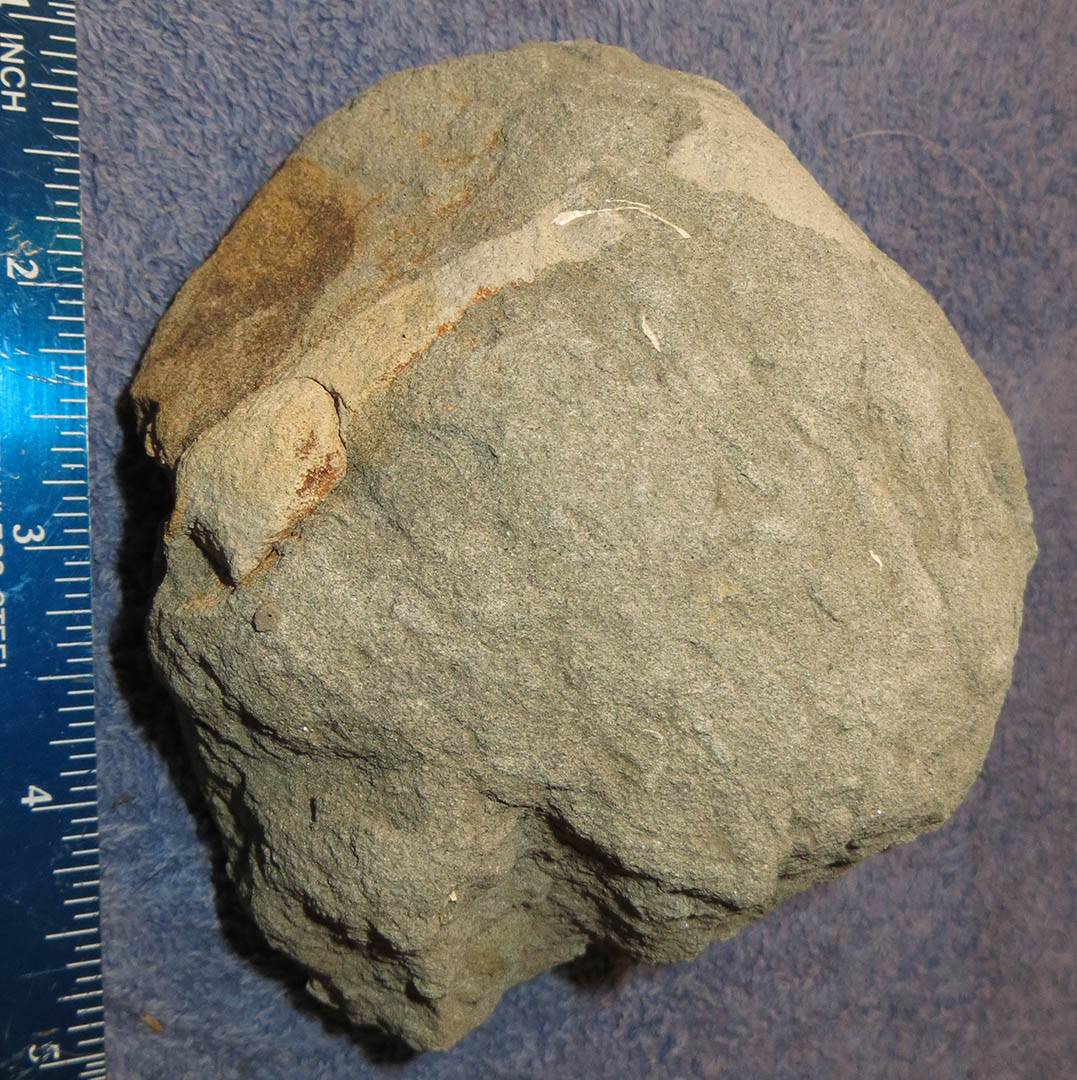
This fossil looks like it is likely bone, but we'll see! The fossil is in moderately delicate sandstone, which will make it easier to extract.


 ~~~~~~~~~~~~~~~~~~
#13-1_M6


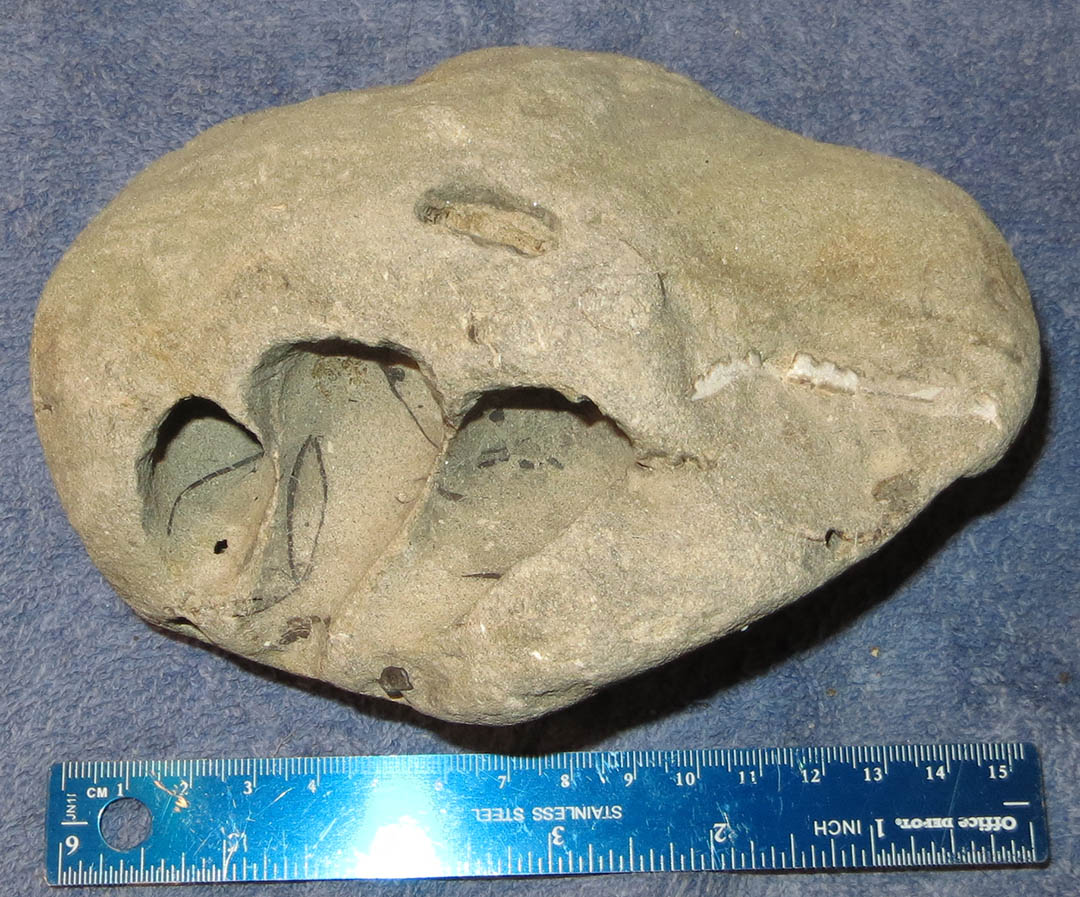
We also found some interesting mud stone type pieces. This one is particularly interesting since something has created/bored fairly large holes in the  mud stone (very hard mud stone in this case), including boring right through several fossils.

This one is very interesting "as is", so I doubt we will do much, if any, cleaning on it. 


.... sometimes you can get "help" ...


         ~~~~~~~~~~~~~~~~~~
         #13-1_M7/ 8/ 9/ 10/ 11

Several pieces with exposed shell.
~~~~~~~~~~~~~~~~~~
#13-1_M12


~~~~~~~~~~~~~~~~~~
#13-1_M13

Another concretion with assorted mollusc fossils.


~~~~~~~~~~~~~~~~~~
#13-1_M14/ 15/ 16

Small concretions with bivalve fossils.


Most of the following pieces have a fairly granular texture:

~~~~~~~~~~~~~~~~~~
#13-1_M17/ 18/ 19/ 20 


~~~~~~~~~~~~~~~~~~
#13-1_M21


~~~~~~~~~~~~~~~~~~
#13-1_M22/ 23/ 24


~~~~~~~~~~~~~~~~~~
#13-1_M25/ 26/ 24


The following pieces are agates or have some agate-like qualities:

~~~~~~~~~~~~~~~~~~
#13-1_M28/ 29/ 30/ 31/ 32/ 33


~~~~~~~~~~~~~~~~~~
#13-1_M34/ 35/ 36/ 37/ 38/ 39/ 40


~~~~~~~~~~~~~~~~~~
#13-1_M41


the most unique of our finds at Moolack Beach....
~~~~~~~~~~~~~~~~~~
#13-1_M42

This fossil ....


Join us in our ongoing Quest...
... continued in... Coastal Fossils- The Winter Collection #2 (2 of 2)[IBL]; the Lost Creek collection / fossils.