Showing posts with label Pacific. Show all posts

Thursday, November 3, 2016

Jellyfish Day presents Mastigias papua! (the spotted lagoon jelly)


The Spotted Lagoon Jelly, has multiple mouth openings on each of it's 4 oral arms (see those things that look like odd tentacles? those are oral arms), instead of a single central mouth opening.
The lagoon jelly is greenish brown in color due to the crop of symbiotic algae (zooxanthellae) it grows in its tissues, which produces food for the jelly to harvest. It also catches about 30% of it's food with it's oral arms.
 Sometimes mall fish live inside of the jellies!

It is also known as "lagoon jelly", is found in bays and lagoons in the tropical zone of the Pacific Ocean.
This particular jelly was filmed at Seattle Aquarium.

These jellies live 3 to 4 months and are most active from summer to early fall.


The life cycle and anatomy of jellies will be discussed in another post!

For best viewing go to our YouTube channel and change video settings to 1080 HD.

~~~~~~~~~~~~
©Danaan DeNeve / Chiara DeNeve, 1999-current

Wednesday, March 6, 2013

The Evolution of The Crocheted Kraken! (instructions included)


... evidence for the evolution of the crocheted kraken...


As I said in the blog post [Beginner's Crochet and Basic Projects (Crochet #1)]- about a month ago I was shown a really cool scale design that had been crocheted... and suddenly, and unexpectedly, realized I wanted to know how to crochet so I could make a similar design, in wire. This was when I realized that I suddenly, and urgently, needed to learn to crochet! (as i said in the first crochet post, i really didn't see this coming, at all).


So, to gain the experience I would need for making scales, I made 
<~ a face cloth, 
and then a hat ~> , 
and then
 started on the next 
...
(more complex)
...
                        ... hat ~>

... I know, where is the kraken?! 
I just wanted to demonstrate, first, how quickly, 
in crochet, you can move 
from making a simple useful thing (face cloth) 
to making something very 
useful and functional (hats) 
to making *really* important things (krakens and scales!).


As you test this pattern (because, yeah... while i tested this on myself, this is the first crochet pattern I've ever written, there may be an error or 2, but contact me and i'll help you through and correct the pattern!)

Crocheting a Kraken (or squid ; )

First, choose your color and texture!
You can choose yarn or any sort of string, but if you are fairly new to crochet I suggest something that isn't too fuzzy, complex, or very fine for this project.

I crocheted 2 squid / krakens, partly because the first one was made from a bulky yarn which looked better with a larger design than I'd originally intended (for my hat ; ) ... and partly to test the pattern I created for the kraken.

Keep in mind that the size of the "string" (yarn) will directly affect the size of your kraken, hopefully the sizes I used will give you an approximate guideline if you alter sizes.


The Giant Squid / Kraken Crochet Pattern

[The first photos are of the squid before stuffing!]

Things You'll Need (Materials)
~yarn/ string/ ?thread      ~crochet hooks
~eyes (beads/ buttons)    ~scissors
~needle                             ~choice of stuffing
                                         
First choose your yarn / string.
  < {A- for my first kraken I used "Bulky" yarn (Loops and Threads~ Charisma) and a "K" crochet hook ("L" was suggested on the packaging).
   {B- for my second kraken I used "Fine" yarn (Merino wool) and "F" and "G" crochet hooks. >

One important thing to recognize: if you are following these instructions and you aren't using U.S, crochet definitions you may/will have to translate the stitches!
US to UK conversions are here.  If you *are* converting, I recommend printing out the instructions and overwriting your conversion!


Beginning the kraken
1} chain (ch) 3 stitches.
   {B use "G" hook for {B squid.
Loop the the 3rd chain to the 1st and get ready to begin the next row of stitches...
   {B for {B squid switch to to "F" hook.
2} crochet 2 double crochet (dc) in each for one round ( = 6 dc).
3} single crochet (sc) for one round ( = 6 sc).
4} sc in each stitch and in every 3rd stitch crochet TWO single crochet stitches (2 sc) (result = ~8 sc in this round)~ this is called an "increase" (incr = increasing the number of stitches per row over the previous row by putting more than one stitch in some (or all) stitches from the previous row)
5} sc in each stitch for one round (~8 sc)
6} sc in each stitch and increase (incr) in every 3rd stitch (result = ~10 sc in this round).
7} sc in each stitch and incr in every 4th stitch (result = ~12 sc in this round).
8} 1sc in each stitch ~4 additional rounds (for {B the length of the body is ~ 1 1/2+" at this point)

9} incr in every 4th stitch (one round).
10} incr in every 6th stitch (for {B the length of the body is ~ 2+" at this point)
11} sc in each stitch for ~7 rounds rounds (there is about 21 sc stitches in each round and for {B the length of the body is ~ 3" at this point)
12} sc in each stitch skipping over every 5th stitch~ this is called a "decrease" (decr = decreasing the number of stitches per row compared to the previous row by putting fewer crochet stitches in some stitches from the previous row) for one row.
13} decr sc every 3rd stitch for one row (result = 8 sc in this round)
14} 1 round of sc in each stitch (8 sc "links") ~ these 8 sc will be called the "base 8" (for starting each of the 8 arms)

   ~> IMPORTANT! DO NOT CUT YARN!
The squid can be stuffed at this point, or stuffed when completed (I stuffed mine after the crochet was completed).

ARMS
15} Each arm will be started in one of the "base 8" stitches, as a continuous piece. The yarn will not be cut until all 8 arms and the 2 tentacles are completed. The arms are each 30-39 foundation chains long (ch). At the end of the chain, return back up the chain starting with single crochet (sc), and continue "up the chain" using either the individual directions for each arm (below) or use YOUR OWN IDEAS. At the top of the chain, stitch through either the stitch used to start that arm or a stitch low on the body, then "turn" and stitch through the next of the "base 8" stitches to start the next arm. 
See diagram.
The "abbreviations" that look like e.g. 3(scx2) means THREE sets of what you see in the parenthesis {in other words 2 single crochet stitches in each of the next THREE stitches (sets)} AND 2(scx2, sc) means TWO sets of the stitches inside the parenthesis {which would be scx2, sc, scx2, sc}
   15} 1) ch 30 - 12 single crochet stitches (12 sc), 2 sets of single crochets twice in each stitch (2 scx2), 12 sc, in the next stitch crochet 2 single crochet stitches (scx2), finish up the arm with sc stitches (sc>) ;
   15} 2) ch 36 - 6sc, 3scx2, 9sc, scx2, scx3, scx2, 12sc, scx2, sc, 2(scx2), sc>
   15} 3) ch 31 - 3sc, scx2, 6(sc, scx2), 9sc, scx3, sc>
   15} 4) ch 39 - 12sc, scx3, 6sc, scx3, 3(3sc, scx3)
   15} 5) ch 30 - 3sc, 2(scx3, 3sc), scx6, 12sc, scx3, sc>
   15} 6) ch 36 - 13sc, scx2, 13sc, scx2, 3sc, scx3, sc>, last scx6
   15} 7) ch 33 - 3sc, 3(scx2), 3sc, scx2, 6sc, 2(scx2, sc), scx3, 6sc, scx3, sc>
   15} 8) ch 39 - 2(3sc, scx3, 3sc, scx6), 12sc, scx6, 3sc, scx3, 3sc, scx6, sc>

TENTACLES
16} To start the tentacles ch or sc in a stitch between the last arm and the "mouth" opening in the middle of the arms. a} The tentacles are each also based on a long chain, 54- 57 chains long. b} To create the tentacle sucker pad at the end of each chain (see diagram to the right ~> ) return back up the chain starting with 2 single crochets (2sc), and continue "up the chain" using 2 double crochets (2dc), one half double crochet (hdc), then 2 single crochets (2sc). THEN chain stitch through the chain and interlock chain stitch "around" the pad (ch through only ONE yarn "thread"), down to the tip of the pad then back "up" the other side to join the original descending chain. c} Interlocking chain stitch up the tentacle to the "mouth", d} sc to the opposite side of the "mouth" opening and start a new tentacle chain (between the "mouth" opening and arms opposite the first tentacle).
See diagram for general pattern.
   16} 1) ch 54 - then follow instructions outlined above a} through d}.
   16} 2) ch 57- then follow instructions outlined above a} through c}. Finish off.

FINS
17} "Flatten" the squid to determine /create sides /edges where each of the 2 fins will be stitched in place. Cut a piece of the yarn ~30" to 36" long and thread it (approximately) through the 1st and 2nd crocheted rows (the narrow end, where you started your crochet kraken!), with approximately half of it sticking out on each side. Each side of the fin will start with a chain stitch to anchor the stitching of each fin. Stitch from the narrow end in a ~ straight line toward the arms ("mouth" opening).
17} side 1) chain on 1, 3sc, 2hdc, dc, dcx2 with hdc (in the same stitch), chain and slip stitch to finish off.
17} side 2) chain on 1, 3sc, 2hdc, dc, dcx2 with hdc (in the same stitch), chain and slip stitch to finish off.


I'm realizing I should find those diagrams I made and add them  : ) 
~> ~> ~>


Join us in our ongoing Quest...
... continued ...

Saturday, February 9, 2013

Coastal Fossils- The Winter Collection #1 (1 of 2)


 ...continued from... Coastal Fossils - Gifts of the Winter Beach #3


We collected so many interesting fossils and agates during our winter excursion to the central Oregon coast [IBLs] that it will take a couple posts to share all of them! We'll separate them into 2 main groupings: 1) Moolack Beach and 2) Lost Creek Beach. Moolack Beach will be shared first since that is the smaller collection (and I've managed to photograph all of it already!  ; )

Individual finds/fossils will be explored further as we have time.

Right! Now on with viewing the collections...

The Moolack Beach Collection / Fossils


To the right is the entire collection from Moolack Beach (except the "finds" that includes the specimens photographed and left "in situ" (in place)).

As I said earlier, the collection from Moolack Beach is smaller than the Lost Creek collection, but it is an intriguing collection...
... and we'll save the most intriguing find for last, since it will take the most space to get a good look at it.


~~~~~~~~~~~~~~~~~~
#13-1_M1


< This is the largest of the concretions that we collected (upper left in the "group photo" ; )  on this excursion. It measures ~ 9 1/2" long.


Even at this stage you can easily see several different types of bivalves (clams), a couple gastropods, and two fossils that are showing up as a very different sort of fossil- "brown" (see one up close below).


This is the "left edge" of the piece shown above. I'm not absolutely sure what we are looking at here, but we'll get a better idea once we have a chance to look at it closer and start carefully removing the surrounding rock.
By the way, if you can identify any of the fossils being shown we'd love to hear from you!


~~~~~~~~~~~~~~~~~~
#13-1_M2


This smaller concretion has a lot of intriguing things going on; this piece has a lot of exposed crystalline structure, some interesting bivalves,


...and we'll be looking at these unusual (exposed)  structures to see what they are also... >


 ~~~~~~~~~~~~~~~~~~
#13-1_M3
 This concretion appears to be all bivalves...


~~~~~~~~~~~~~~~~~~
#13-1_M4


This concretion is about 6 1/2" long. We will leave some of these concretions "intact" in order to share what to look for on the beach when hunting fossil concretions!


~~~~~~~~~~~~~~~~~~
#13-1_M5


This fossil looks like it is likely bone, but we'll see! The fossil is in moderately delicate sandstone, which will make it easier to extract.


 ~~~~~~~~~~~~~~~~~~
#13-1_M6


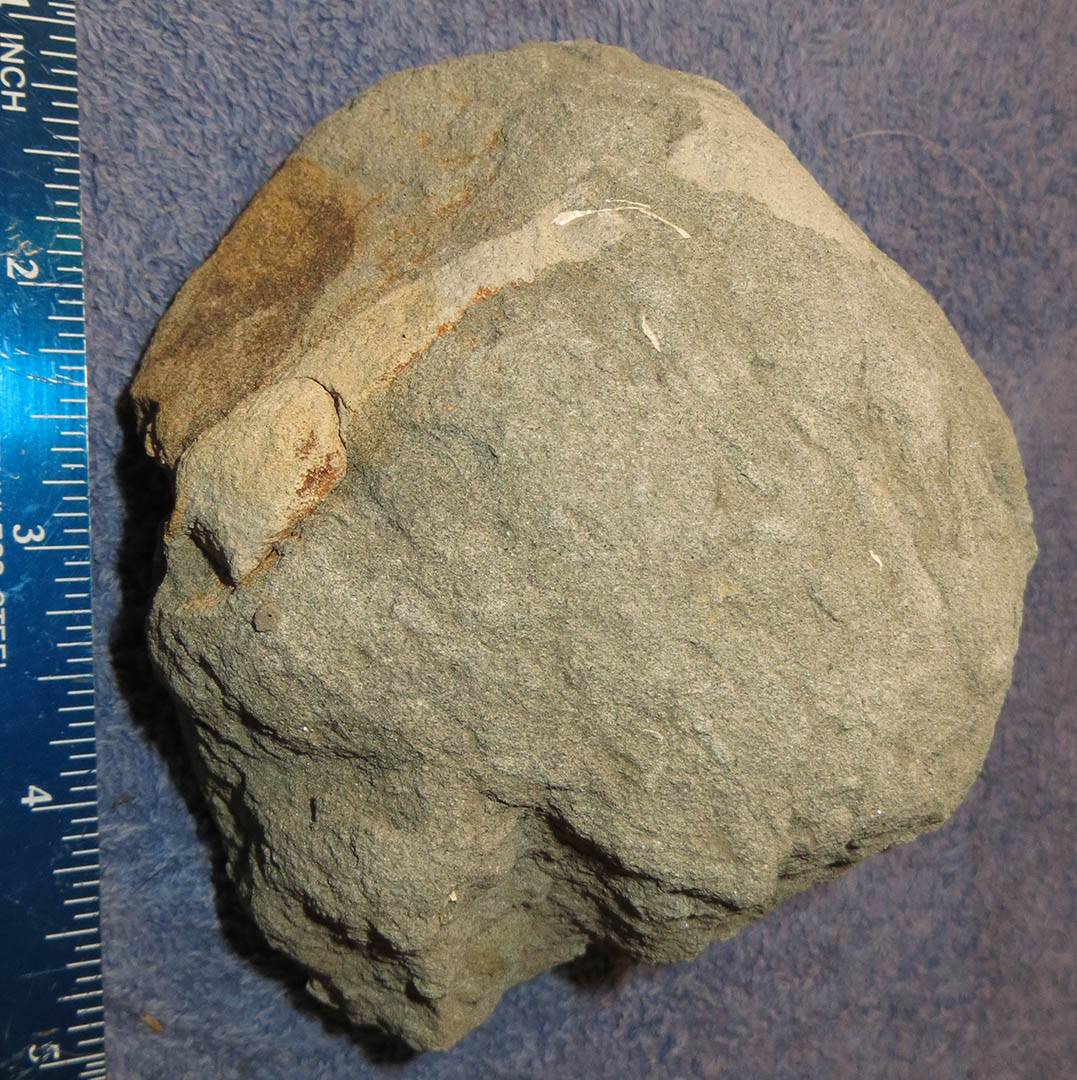
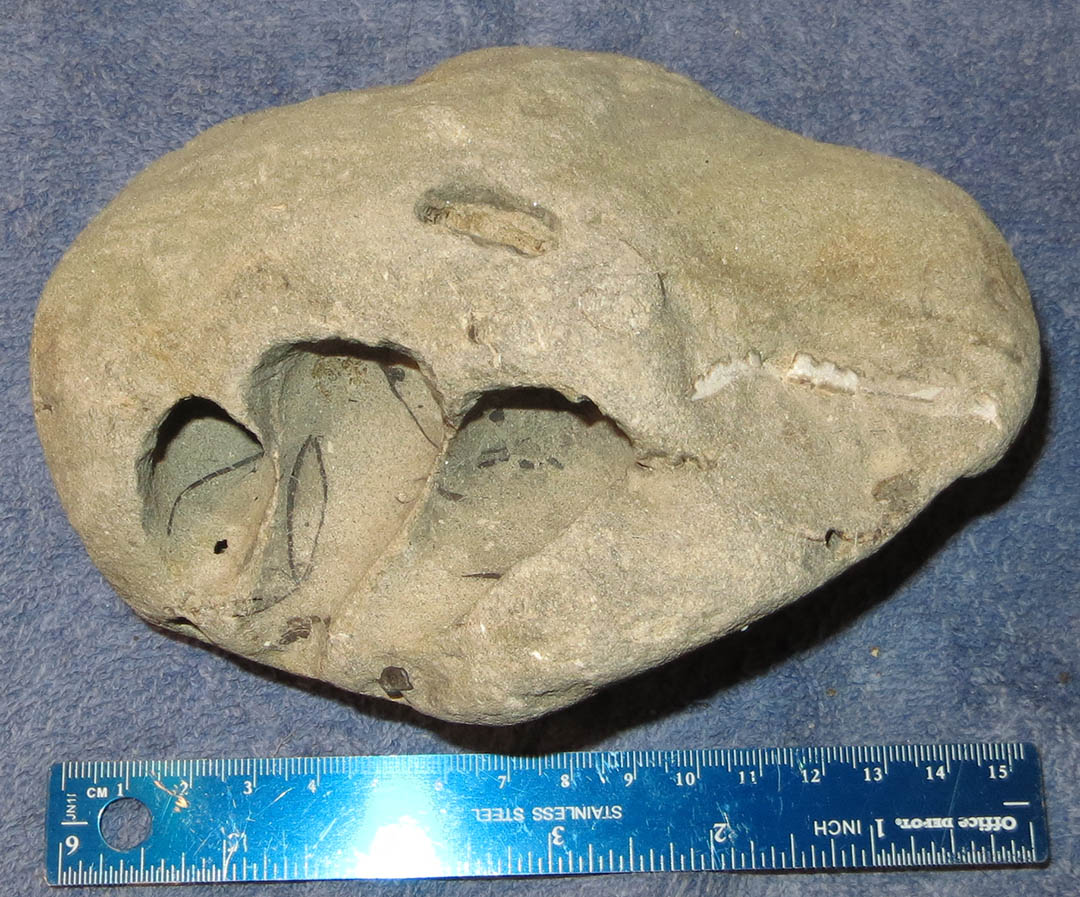
We also found some interesting mud stone type pieces. This one is particularly interesting since something has created/bored fairly large holes in the  mud stone (very hard mud stone in this case), including boring right through several fossils.

This one is very interesting "as is", so I doubt we will do much, if any, cleaning on it. 


.... sometimes you can get "help" ...


         ~~~~~~~~~~~~~~~~~~
         #13-1_M7/ 8/ 9/ 10/ 11

Several pieces with exposed shell.
~~~~~~~~~~~~~~~~~~
#13-1_M12


~~~~~~~~~~~~~~~~~~
#13-1_M13

Another concretion with assorted mollusc fossils.


~~~~~~~~~~~~~~~~~~
#13-1_M14/ 15/ 16

Small concretions with bivalve fossils.


Most of the following pieces have a fairly granular texture:

~~~~~~~~~~~~~~~~~~
#13-1_M17/ 18/ 19/ 20 


~~~~~~~~~~~~~~~~~~
#13-1_M21


~~~~~~~~~~~~~~~~~~
#13-1_M22/ 23/ 24


~~~~~~~~~~~~~~~~~~
#13-1_M25/ 26/ 24


The following pieces are agates or have some agate-like qualities:

~~~~~~~~~~~~~~~~~~
#13-1_M28/ 29/ 30/ 31/ 32/ 33


~~~~~~~~~~~~~~~~~~
#13-1_M34/ 35/ 36/ 37/ 38/ 39/ 40


~~~~~~~~~~~~~~~~~~
#13-1_M41


the most unique of our finds at Moolack Beach....
~~~~~~~~~~~~~~~~~~
#13-1_M42

This fossil ....


Join us in our ongoing Quest...
... continued in... Coastal Fossils- The Winter Collection #2 (2 of 2)[IBL]; the Lost Creek collection / fossils.


Sunday, January 27, 2013

Coastal Fossils - Gifts of the Winter Beach #3

...continued from... Coastal Fossils - Gifts of the Winter Beach #2


The third day of the excursion, the second full day of fossil and agate hunting, began where the previous day ended: the lower section of Moolack Beach. Again when we arrived the path to the beach was very frosty, and again we started our fossil hunting before the tide was at it's lowest.

Low tide opened a large expanse of beach for exploration, but as you can see there wasn't much beach rubble exposed on the low tide beach...


... but while we didn't find as many fossils/ agates, we did find some very interesting fossils and we had a great time exploring lower Moolack Beach! [IBL]

We photographed this fossil concretion "in place", since, under all that sand, it is still attached to the rocky substrate! (Please enjoy this fossil concretion in place so others can enjoy it also!) The quarter in the pic gives an idea of the size (a quarter is ~ 1" across).


.
 If you're in the Newport, Or., area at low tide and you're interested in fossils, here is where this^ fossil is attached to Moolack Beach...


A close-up of the scallop-type fossil in the above concretion >>>
Below is more of the type of rock that this fossil is in...


The beach was amazing...


We found these large concretions moderately high on the bank.

< This ~9 1/2" concretion appears to be made up of mostly mollusc fossils.


The concretion to the right has a few bivalve fossils and some interesting crystalline type "fillings". We'll be taking a closer look at it once we get it home!

We found some additional pieces, including a concretion with pieces of bone, agate, and gastropods (snails); additional photos, identification, and discussion of the fossils found during this excursion will be posted in an upcoming blog posting  [IBL][Ii].


 After exploring Moolack it was time to head back to Lost Creek to see what the tides had done to the beach since yesterday... would there be more beach exposure? or would the tides have brought sand up to cover the beach?


The change in the beach was immediately obvious! [IBL]

There was definitely more sand on the beach than there was at the same point in the tidal stage than the day before.


Some of the "mushroom" type rock formations we had looked at the day before were completely covered by sand, others were still showing but not nearly as much...


After checking the area of the beach we "hunted" yesterday, and finding only a few pieces, we moved south of Lost Creek to explore further down Lost Creek Beach.

Sands of Lost Creek...


The southern section of Lost Creek is also interesting; it seems not to be as deeply eroded as the area northern section (compare exposed section below to the exposed section above).


We picked up some more fossils and agates, but in this area more of the fossils were gastropods ("snails") rather than bivalves ("clams"). [Iv]


...and we found some interesting mud stone formations...


As the tide rose we ate a very late lunch on some well positioned rocks and enjoyed the view...


Since I knew the heights and times for the tides (make sure you collect this info before you set out on a coastal excursion, and watch the weather and tides closely! : ) I knew we did not need to rush back up the beach; we took our time and wandered back up the beach , enjoying our finds, the weather, and the incredible views, along the way...


... since we wanted to take some pics of the sunset from Yaquina Bay Lighthouse, and the sun was quickly dropping to the horizon, it was time to say goodbye to Lost Creek... and to this winter-time fossil hunting excursion.


Join us in our ongoing Quest...
... continued in... Coastal Fossils- The Winter Collection #1 (1 of 2)[IBL]