Showing posts with label national. Show all posts
Thursday, May 5, 2016
World Space Day! (May 6!!!)
International Space Day, now celebrated on the first Friday in May, was started in 2001 by astronaut (and senator) John Glenn. It was developed from the popularity of the National (US) Space Day created by Lockheed Martin for a one day event in 1997.
On May 5, 1961, Commander Alan Shepard Jr. became the first America astronaut to be launched into space, aboard Freedom 7 (space capsule). The flight, suborbital, lasted 15 minutes and traveled to a height of 116 miles.
On April 12, 1961, Yuri Gagarin, Soviet cosmonaut, was the first man launched in to space and safely returned!
Stay tuned for World Space Week in October!
Many museums hold Space Day celebrations:
Smithsonian International Air and Space Museum
Seattle Museum of Flight
Denver Museum of Nature and Science
Oregon Museum of Science and Industry
Maine Space Grant Consortium Space Day Celebration
World Space Day on FB
Labels:
astronaut,
celebration,
cosmonaut,
Day,
first,
flight,
international,
May,
museum,
national,
space,
Thursday,
world
Thursday, April 28, 2016
National Arbor Day(s) - US April 29, 2016
Arbor Day is an international celebration, but it is celebrated on different days around the world (usually in spring) depending upon local climates. The first (known) Arbor Festival was in Mondonedo, Spain, in 1594. The first *modern* Arbor Day was held in 1805 in Villanueva de la Sierra, Spain.
In the US the first Arbor Day was celebrated April 10, 1872, when ~1 million trees were planted in Nebraska. Over time Arbor Day became an official celebration with President Roosevelt issuing an Arbor Day Proclamation (April 15, 1907) addressed to the school children of the United States about the importance of trees, and encouraging that forestry be taught in US schools.
Over the years the date has changed a bit, and now Arbor Day is celebrated in the US on the last Friday in April, this year that is April 29!
A partial list of tree planting celebration (& times) around the world:
Australia
National
Tree Day is on the last Sunday in July. Arbor Day has been observed in
Australia since June 20, 1889.
Belgium
International
Day of Tree-planting is celebrated ~March 21 as an educational day/observance,
not as a public holiday.
Brazil
Arbor
Day (Dia da Árvore) is celebrated September 21.
British
Virgin Islands
Sponsored
by the National Parks Trust, Arbour Day is celebrated November 22. \
Cambodia
Cambodia
celebrates Arbor Day July 9.
Canada
National
Forest Week is celebrated the last full week of September, with National Tree
Day falling on the Wednesday of that week. Individual Arbor Days are celebrated
around Canada in spring.
Central
African Republic
National
Tree Planting Day is July 20.
China
Arbor
Day, celebrated on March 12, is upheld in China with the The Resolution on the
Unfolding of a Nationwide Voluntary Tree-planting Campaign,1981
Costa
Rica
"Día
del Árbol" is June 15.
Egypt
Arbor
Day is January 15
Germany
The
first Arbor Day ("Tag des Baumes") in Germany was in 1952, it is
celebrated on April 25.
India
The
tree planting festival in India is called Van Mahotsav (festival of trees). Originating
in 1947, it lasts one week in July.
Iran
"National
Tree Planting Day is on the 15th day of month Esfand which is generally ~
March5.
Israel
Tu
Bishvat (the new year for trees), is on the 15th day of Shvat, which
is ~ January or February.
Japan
Greenery
Day, similar to Arbor Day, is celebrated May 4.
Kenya
National
Tree Planting Day is April 21.
Luxembourg
National
Tree Planting Day is in November.
Republic
of Macedonia
'Tree
Day-Plant Your Future' tradition was started on March 12, 2008, when over
150,000 Macedonians planted 2 million trees in one day (symbolically, one for
each citizen). It continues now each year.
Malawi
National
Tree Planting Day is on the 2nd Monday of December.
Mexico
The
Día del Árbol , started in 1959, it is celebrated each year on the 2nd
Thursday of July.
Mongolia
The
first National Tree Planting Day was celebrated in 2010, it is now tradition on
the 2nd Saturday of May and October.
Namibia
Arbor
Day is celebrated on October 8.
Netherlands
Begun
in 1957, National Festival of Trees (Nationale Boomplantdag/Nationale
Boomfeestdag) is celebrated the third Wednesday of March.
New
Zealand
Arobor
Day is on June 5.
Niger
Arbor
Day is August 3.
Pakistan
National
tree plantation day is August 18.
Philippines
Arbor
Day has been celebrated since 1947, and is now celebrated on June 25.
Poland
Arbor
Day is October 10.
Portugal
Arbor
Day is March 21.
South
Africa
Arbor
Day, begun in 1945, was expanded to Arbor Week in 200, lasting from September
1-7.
South
Korea
Arbor
Day is celebrated April 5.
Spain
Celebrations
for Arbor Day are chosen locally, but they are usually celebrated from February
to May.
Taiwan
Arbor
Day is celebrated on March 12.
Tanzania
National
Tree Planting Day is April 1
Uganda
National
Tree Planting Day is March 24.
United
Kingdom
National
Tree Week, first celebrated in 1975, this year is from Nov 26- Dec 4.
United
States
Arbor
Day is on the last Friday in April.
Venezuela
Día
del Arbol
(Day of the Tree) is the last Sunday of May.
Saturday, April 16, 2016
Water Cycle #3 (complete!) > National Water Week (April 10- 16)
Basics of
It's been a busy week, so, unfortunately that's all for National Water Week... but next week is Earth Day! (and the earth *is* ~70% water, so...... ; ) ).
.
ACTIVE PARTS
Evaporation
Transpiration /
Evapotranspiration
RunOff
Condensation
Sublimation
Seepage
Precipitation (rain, snow, fog, etc.)
Infiltration
Plant UpTake
Recharge
Flow
|
PHYSICAL PARTS
Sun (solar energy)
Clouds
Lake
River
Cloud
Plants/ Trees
Spring
Ground Water
Atmosphere
Water Table |
It's been a busy week, so, unfortunately that's all for National Water Week... but next week is Earth Day! (and the earth *is* ~70% water, so...... ; ) ).
.
Labels:
atmosphere,
color,
condensation,
cycle,
evapotranspiration,
ground,
infiltration,
model,
national,
page,
precipitation,
Quest,
recharge,
run,
seepage,
sublimation,
take,
transpiration,
water,
week
Thursday, April 14, 2016
Water Cycle #2 (hints!) > National Water Week! (April 10- 16)
Try to look up some of the terms and put them in the diagram! On the last day of National Water Week, Saturday, I will add the definitions in case you can't find them.
Some of the terms used in describing the water cycle:
ACTIVE PARTS
Evaporation
Transpiration
Evapotranspiration
RunOff
Condensation
Sublimation
Seepage
Precipitation
Infiltration
Plant UpTake
Recharge
Flow
|
PHYSICAL PARTS
Sun
Clouds
Lake
River
Cloud
Plants/ Trees
Spring
GroundWater
Atmosphere
|
The blank coloring page:
And a colored page:
And last, for today, fill in the blanks!
I haven't given you all of the blanks, first try to fill in some on your own!
.
Labels:
atmosphere,
color,
condensation,
cycle,
evapotranspiration,
ground,
infiltration,
model,
national,
page,
precipitation,
Quest,
recharge,
run,
seepage,
sublimation,
take,
transpiration,
water,
week
Monday, February 22, 2016
National Invasive Species Week> Creeping Buttercup
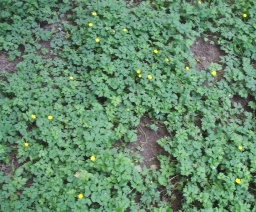
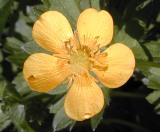
Creeping buttercup
(Ranunculus repens)
Creeping
buttercup is a perennial species of buttercup native to Europe; now found across North America and throughout much of the world. Creeping buttercup loves moist soils and is invasive.Identification
> perennial> height up to 1', generally shorter
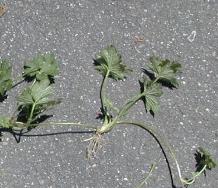
> leaves dark green with light patches, divided into three toothed leaflets
> central leaflet on the plant stalk
> flowers generally bloom March to August/September
> "fruits" are firm clusters of 20-50 achenes on round-prickly heads, each producing 20-150 seeds, dispersed by wind, water, and animals
> seeds can last up to 80 years in waterlogged soils
> creeping stolons (runners) with short swollen stems, can root at stolon nodes
Impacts
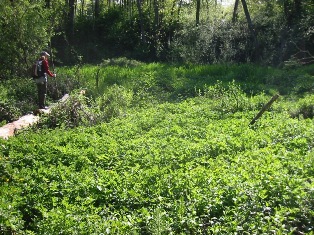
Creeping buttercup is very invasive and competitive, crowding out other plants, especially in moist soils. A single plant can spread over 40' square per year. Creeping buttercup generally has a negative impact on other plants and is toxic (can be fatal) to animals. It also depletes soils of potassium.
Habits
Creeping buttercup responds to immediate environmental conditions, spreading via seeds and/or stolons depending upon which is most most favorable in the conditions. The structure of the stolons even responds to the environment: number, length, numbers of branchings, etc.Creeping buttercup can overwinter as a rosette or die back to ground level, storing nutrients in short swollen stems that growth rapidly the next spring.
Prevention/Control/Eradication
In the case of Creeping Buttercup, slow and steady wins the race. Protect other species while working on control the buttercup, moving from less to more heavily infested areas. Creeping buttercup will also grow in moist sandy and gravel-based soils and will tolerate salinity. In woodlands, this buttercup is mainly restricted to clearings, forest margins and paths. It is frost tolerant and will survive moderate droughts. Creeping buttercup is a very tolerant plant: frosts, moderate droughts, shade (forest margins, paths and clearings), soil compaction (trampling and grazing).> promote healthy grass by over-seeding, fertilizing as needed, and not over-grazing;
> add lime to improve grass health and keep buttercup from re-establishing (lime won’t control buttercup that is already well established);
> improve soil drainage and reduce compaction by aerating and avoid trampling when soils are wet;
> clean mowers and other equipment to avoid spreading buttercup seeds;
> remove all of the runners, roots and growing points by trowel (this is most effective from fall to spring while the soil is moist and roots break off less);
> incomplete removal of roots and stems may increase the buttercup population (they can sprout from nodes along stem and root fragments);
> soil can increase seed germination (the number of seeds in infested soils can be immense compared to the number of plants present);
> creeping buttercup’s growing point is at soil level, so plants resist mowing and quickly re-sprout when cut;
> regular cultivation can kill the buttercup but plants buried by cultivation can grow back up through deep soil and re-establish themselves and long-lived seeds in the soil can germinate and re-infest the area once cultivation ceases;
> herbicides can be used if allowed and appropriate for the site and land use (use great care to follow all label directions to ensure safe and effective use).
> usually requires at least two or three applications to eradicate creeping buttercup because of the seed bank and because some mature plants will generally recover;
> carefully monitor the treated area for re-growth and pull up any new seedlings before they establish runners.
Subscribe to:
Comments (Atom)